Optimizing Infrastructure with Cloud-Native: The Architectural Solution for Business Agility & Scalability
In the context of robust digital transformation, simply having stable software is no longer enough to build a competitive advantage. The ability to handle sudden traffic spikes, accelerate the release of new features (Time-to-Market), and highly optimize resources are the true metrics that define a company's technological capability. To solve this equation, Cloud-Native—powered by Microservices architecture and Containerization technology—has become an indispensable operational standard for modern software projects.
1. What is Cloud-Native?
Cloud-Native is an architectural approach to building, running, and scaling applications explicitly designed to leverage the full power and elasticity of cloud computing environments (public, private, or hybrid). Unlike traditional legacy software that is merely rehosted on cloud infrastructure (often referred to as "lift-and-shift"), Cloud-Native applications are engineered from the ground up to thrive in dynamic, highly automated settings.
It represents a paradigm shift from physical, static infrastructure to flexible, software-driven resources—combining containerization, microservices, continuous delivery pipelines (CI/CD), and dynamic orchestration to maximize operational efficiency.
2. The Core Mechanics of the Cloud-Native Ecosystem
Cloud-Native relies on five fundamental principles that work together to create flexible, resilient, and highly scalable software systems:
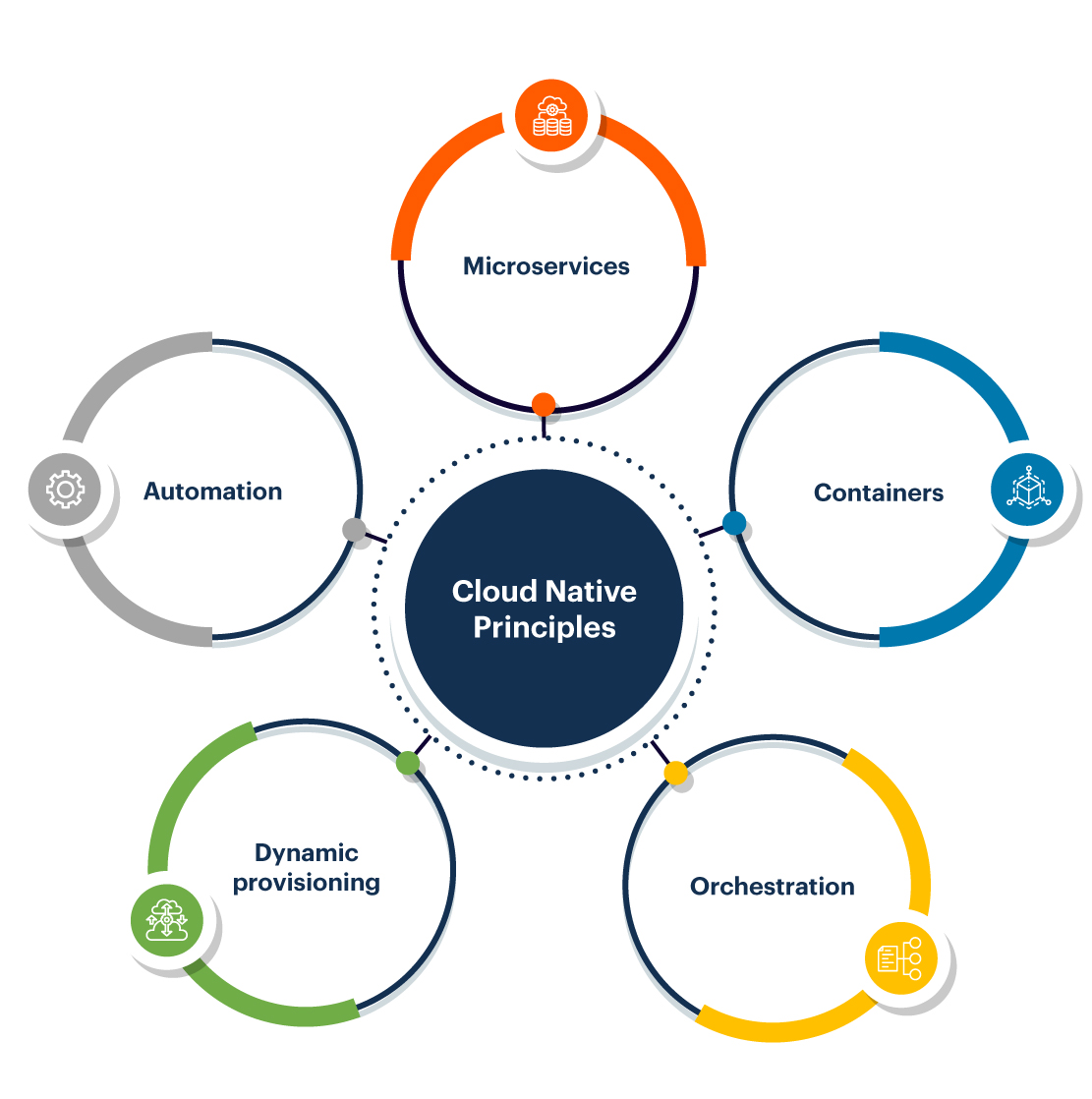
- Microservices Architecture: Decoupling monolithic software into small, loosely coupled, and independently deployable services that communicate seamlessly via lightweight APIs.
- Containers: Packaging application code, dependencies, and environment configuration into standardized units (typically Docker) to guarantee consistent performance across all environments.
- Orchestration: Utilizing automated platforms like Kubernetes (K8s) to manage container lifecycles, handle load balancing, monitor system health, and execute failover recoveries automatically at scale.
- Dynamic Provisioning: Automatically allocating and releasing computing resources (CPU, RAM, storage) on demand, ensuring infrastructure scales fluidly based on real-time traffic without manual hardware setup.
- Automation: Driving deployments through Continuous Integration/Continuous Deployment (CI/CD) pipelines and Infrastructure as Code (IaC), eliminating manual execution risks and speeding up release cycles.
3. How Does Cloud-Native Transform Businesses?
Restructuring a system to a Cloud-Native approach brings direct and profound impacts to both technical and business aspects:
- Auto-scaling and High Availability: During peak periods (such as shopping festivals for E-commerce or month-end closing for financial apps), the system automatically detects load and independently scales up the overloaded services. This eliminates bottlenecks and maintains up to 99.99% uptime without manual intervention.
- Accelerated Time-to-Market: Thanks to the independence of Microservices combined with Continuous Integration and Continuous Deployment (CI/CD) pipelines, development teams can simultaneously push code and release new updates daily, or even hourly. Businesses can respond to market demands much faster than competitors.
- Cost-efficiency: Businesses only pay for the compute resources actually allocated to the Containers. The flexibility in automatically provisioning and releasing resources puts an end to the hardware waste typical of traditional server systems.
4. Tinhvan Software – Your Partner in Sustainable Tech Infrastructure

The migration process from a Monolithic system to Cloud-Native, or building from scratch, requires a methodical strategy to avoid architectural fragmentation or inflated cloud operational costs. With extensive experience in software consulting and development, Tinhvan Software provides in-depth infrastructure architecture solutions closely aligned with our clients' business goals:
- Mastery of Core Technologies: Tinhvan Software's team of experts possesses deep knowledge and practical proficiency in Container platforms (Docker, Kubernetes) and leading cloud ecosystems (AWS, Microsoft Azure, Google Cloud).
- Seamless Digital Transformation: We apply a phased migration process (Strangler Fig Pattern), helping businesses modernize their systems into Microservices step-by-step while ensuring the continuity of current operations.
- Integrating DevSecOps Culture: Tinhvan Software establishes automated CI/CD pipelines and integrates security standards right from the coding phase, ensuring every product launched achieves the optimal balance between speed, performance, and data safety.
Investing in infrastructure architecture today is a guarantee for your business's limitless scalability in the future.
Contact Tinhvan Software to discuss with our experts the most suitable Cloud-Native architecture solution for your project.